Lattice
2025
Ebook Cover & Ad System
Template System
Marketing Design
Brand Deisgn
Documentation
System Thinking

My Role
Lead Visual Designer
Led end-to-end product design, from concept to execution — designing both the physical art piece (industrial and visual design, manufacturability) and the digital experience (UX/UI).
Co-led a seven-person contract development team alongside my technical co-founder.

Timeline
September 2025

Outcome
Spearheaded a strategic pivot from a capital-intensive physical product to a scalable digital-only platform. This decision was driven by market feedback and economic analysis, and it resulted in growing the user base to a peak of nearly 200 active users before ultimately sunsetting the platform.
76%

Faster Production
Reduction in design time required to create a complete ebook cover and ad set.
12

Self‑Serve Campaigns
Ads produced by marketing using the toolkit.

Context
Lattice publishes a steady stream of ebooks and guides
for HR and People teams.
Problem
Each new asset required bespoke cover and ad design, which:
- Slowed down campaign launches
- Led to inconsistencies in color, typography, and layout
- Made it hard for non-designers to create on-brand variations for testing
Solution
The marketing team needed a repeatable system for ebook covers and ads that was:
- Fast to use
- Flexible enough for many topics
- Consistently on-brand across channels

Solution
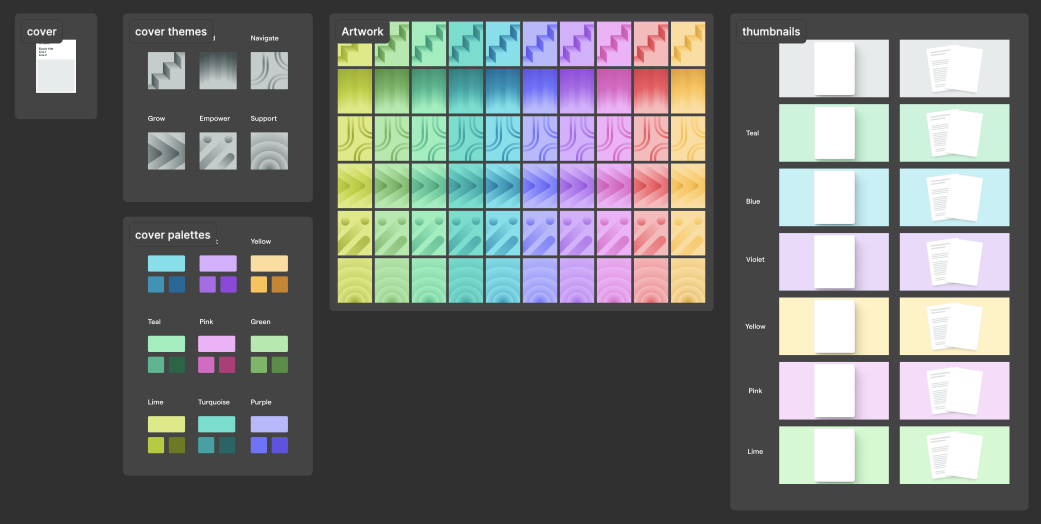
Figma “Toolkit” System. I designed a Figma-based toolkit that brings all visual decisions into one place
Cover themes
A set of abstract patterns (e.g., Succeed, Lead, Navigate, Grow, Empower, Support) representing different content pillars.

Cover palettes
Predefined color families with tints and shades tuned for accessibility and contrast.

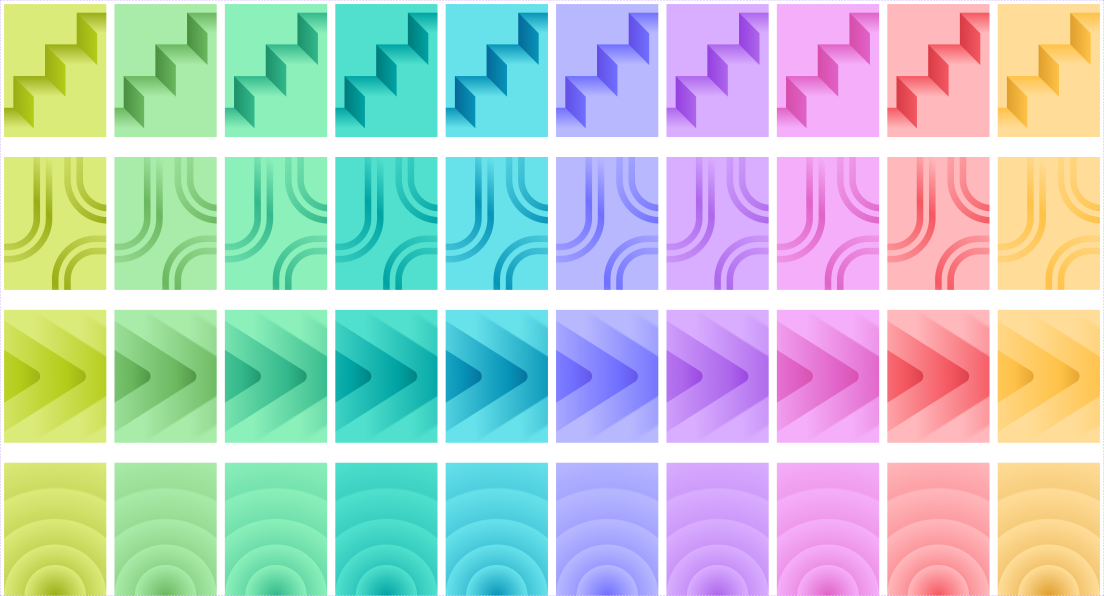
Artwork grid
A large matrix of gradient-based pattern tiles combining themes and palettes.
This gives marketers a wide range of unique, but systematically related, options for each ebook.
What this enables
Anyone can pick a theme + palette and instantly get a cover that feels unique while still clearly part of the Lattice system.

Cover & Ad Templates
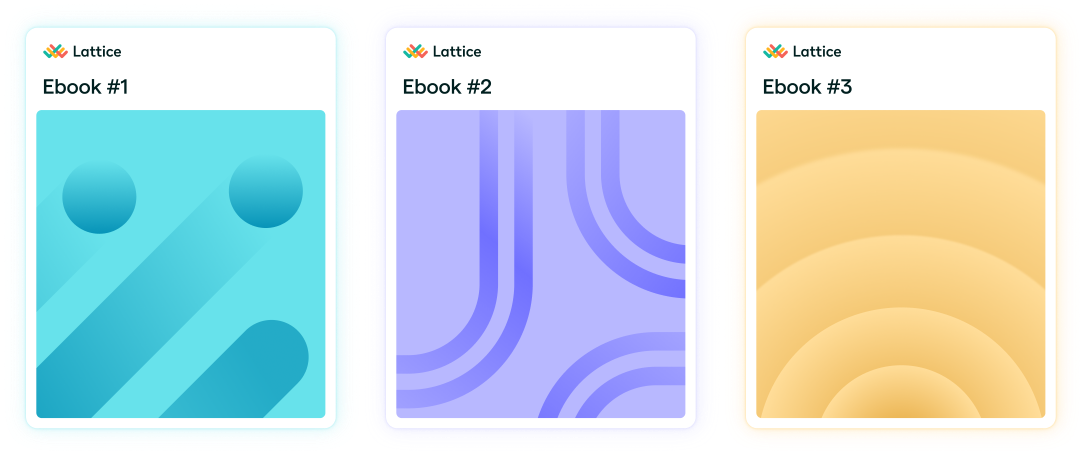
From the toolkit, I created reusable templates in Figma
Ebook cover template
Slowed down campaign launches
Led to inconsistencies in color, typography, and layout
Made it hard for non-designers to create on-brand variations for testing

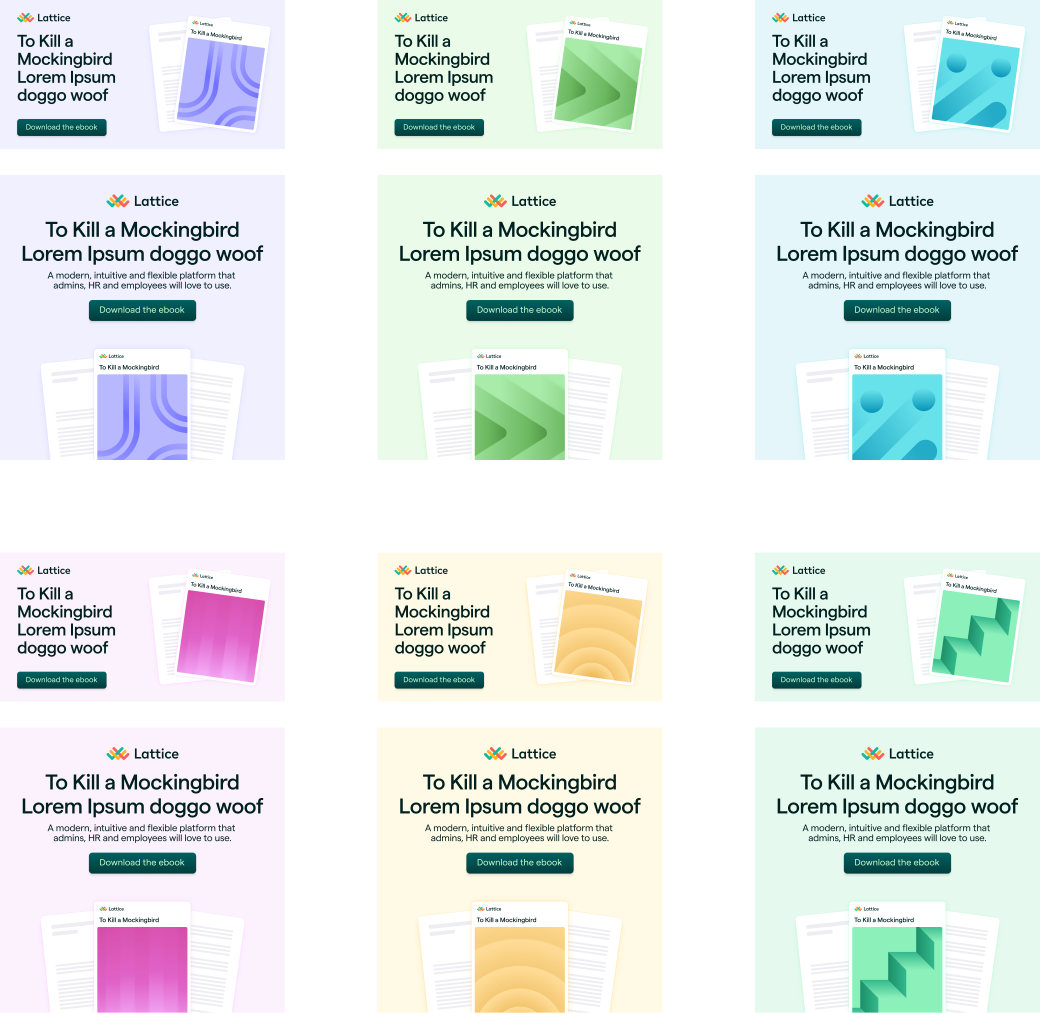
Ad templates
1200×627 and 1200×1200
Layouts reusing the cover artwork plus 1–2 abstract page elements
Clear typographic hierarchy for title, body, and CTA
Background color logic tied to the cover palette (e.g., Teal50 background for a teal cover)
What this enables
This allowed the team to generate complete asset suites—
cover + multiple ad formats—from a single visual choice.

Step‑by‑Step Documentation
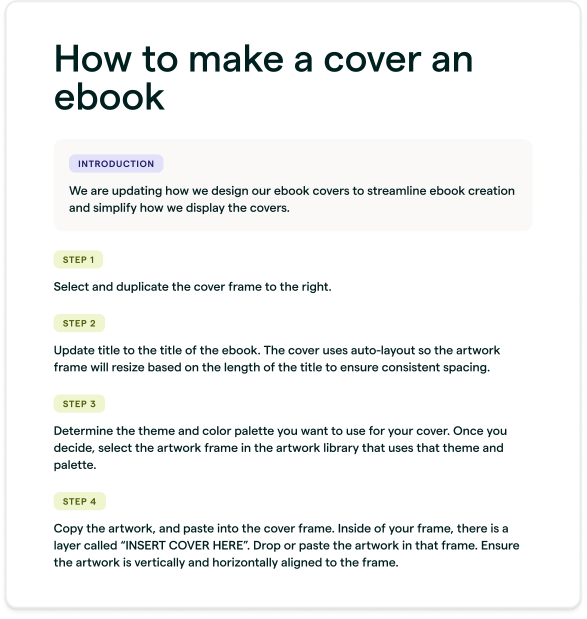
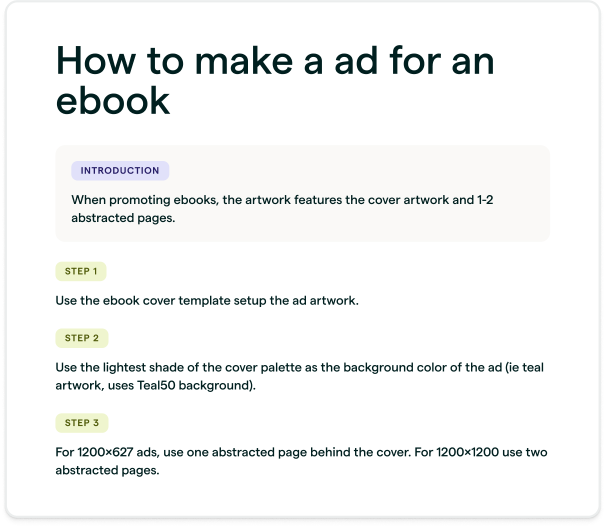
To make the system truly self‑serve, I wrote simple, visual instructions directly in Figma
How to make a cover for an ebook
A set of abstract patterns (e.g., Succeed, Lead, Navigate, Grow, Empower, Support) representing different content pillars.
How to make an ad for an ebook
A set of abstract patterns (e.g., Succeed, Lead, Navigate, Grow, Empower, Support) representing different content pillars.

Outcome
To make the system truly self‑serve, I wrote simple, visual instructions directly in Figma
The marketing team can now create on‑brand ebook covers and ads in minutes, without needing a designer for every variation.
Campaigns maintain a consistent visual language across covers, ads, and channels, while still feeling varied and fresh.
Designers spend more time on higher‑impact concept work and less on repetitive production.
The system supports rapid A/B testing of visuals, because new variants can be generated quickly from the same toolkit.